
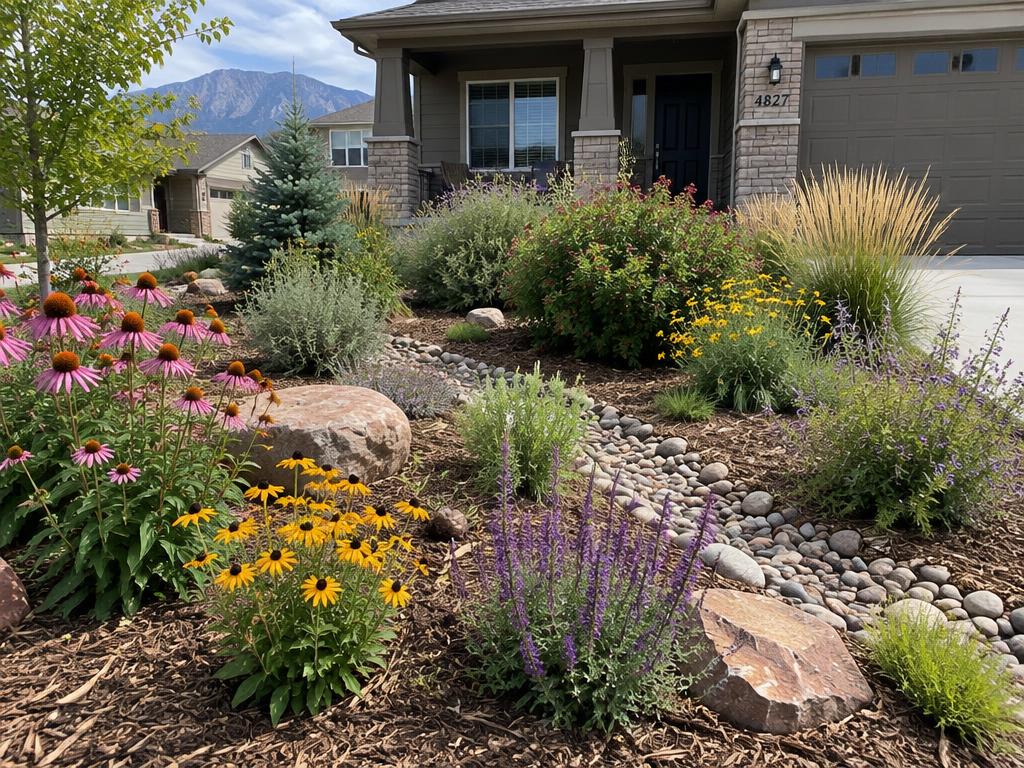
Xeriscaping is landscaping with water conservation as a main goal. Done well, it gives Colorado homeowners a yard that uses less water, handles hot dry stretches and needs less routine work than a full lawn, while still looking planted and alive.
The approach rests on a few well-known principles: plan the yard, improve the soil, keep lawn practical, choose suitable plants, irrigate efficiently, mulch and maintain. Here is how those ideas translate to a real yard in the Denver Metro area.
Keep Lawn Where It Serves A Purpose
Start by looking at which lawn areas you actually use. An open play area or a spot for the dog may be worth keeping. A narrow strip beside the driveway, a parkway or a steep slope that sprinklers never cover evenly is usually a better fit for planting.
Many water providers in the Denver Metro area now limit new lawn or offer programs that encourage lawn replacement, so check what applies to your address before you plan.
Idea: Replace The Hardest-To-Water Areas First
Slopes, corners and strips that brown out each summer are the easiest wins. Converting them to planted beds with drip irrigation often saves the most water and removes the areas that are most frustrating to mow.
Group Plants By Water Need
The core idea of xeriscaping is zoning. Plants that need more water sit together, usually closer to the house or in naturally moist spots. Plants that need very little sit together in the sunniest, driest areas. Each group then gets its own irrigation schedule.
Choose Plants For The Exposure
A plant that thrives in full western sun may struggle on the north side of the house. Look at sun, wind, reflected heat from walls and paving, and mature size. Native and regionally adapted perennials, ornamental grasses and shrubs are a good starting point, but not every drought-tolerant plant suits every site.
Plan For Establishment
New plants need regular watering for their first season or two while roots develop, even if they will need little water later. Lower maintenance does not mean no maintenance: weeding, deadheading and an occasional cut back are still part of caring for the garden.
Prepare Soil And Choose Mulch Carefully
Clay soil is common across the Denver Metro area. It holds water well but drains slowly and can be hard for roots to break through. Many xeric plants prefer lean, well-drained soil, so preparation depends on what is being planted rather than adding the same amendment everywhere.
Organic Mulch Or Rock
Both have a place, and the right choice depends on the bed:
- Wood mulch helps hold moisture and suits shrubs and perennials that like richer soil.
- Rock mulch reflects heat and suits sunny beds of plants that prefer dry conditions.
- Leave space around stems and trunks so mulch does not sit against them.
- Avoid treating a layer of gravel as a replacement for a planting plan; bare rock with few plants gets hot and still grows weeds.
Update Irrigation And Drainage
Removing lawn changes how water should be delivered. Spray heads that covered grass usually need to be capped or converted, and new beds usually work best on drip lines that put water at the roots with less loss to wind and evaporation. Our drainage and irrigation services cover coverage checks and zone changes as part of a conversion.
Drainage still matters in a water-wise yard. Gravel beds and swales can be designed to slow and spread runoff instead of sending it toward the foundation or a neighbor's yard.
Mix In Structure And Living Areas
A water-wise yard does not need to be all planting. Flagstone paths, a small patio or seating area and dry stream beds add places to walk and sit and reduce the area that needs water at all. Where some soft surface is still needed, compare low-water lawn choices and synthetic options in our sod and artificial turf installation guide.
Start Your Water-Wise Yard
Lemon Property Services designs and installs water-wise landscapes from our base in Henderson, Colorado, for homes across the Denver Metro area, including Thornton, Northglenn and Denver. See how a conversion works on our xeriscaping service page, then request a free estimate.